Understanding Developmental Milestones in Babies
Watching your baby grow and develop is one of the most exciting parts of early parenthood. In the first year of life, babies go through incredible changes as they learn to move, explore, and interact with the world around them.
You may hear health professionals talk about developmental milestones, but what exactly does that mean?
Developmental milestones are skills that most babies develop within a general age range, such as rolling, sitting, crawling, and eventually walking. These milestones help us understand how a baby’s nervous system, muscles, and coordination are developing.
Every baby develops at their own pace, but milestones can offer helpful guidance on how development is progressing.
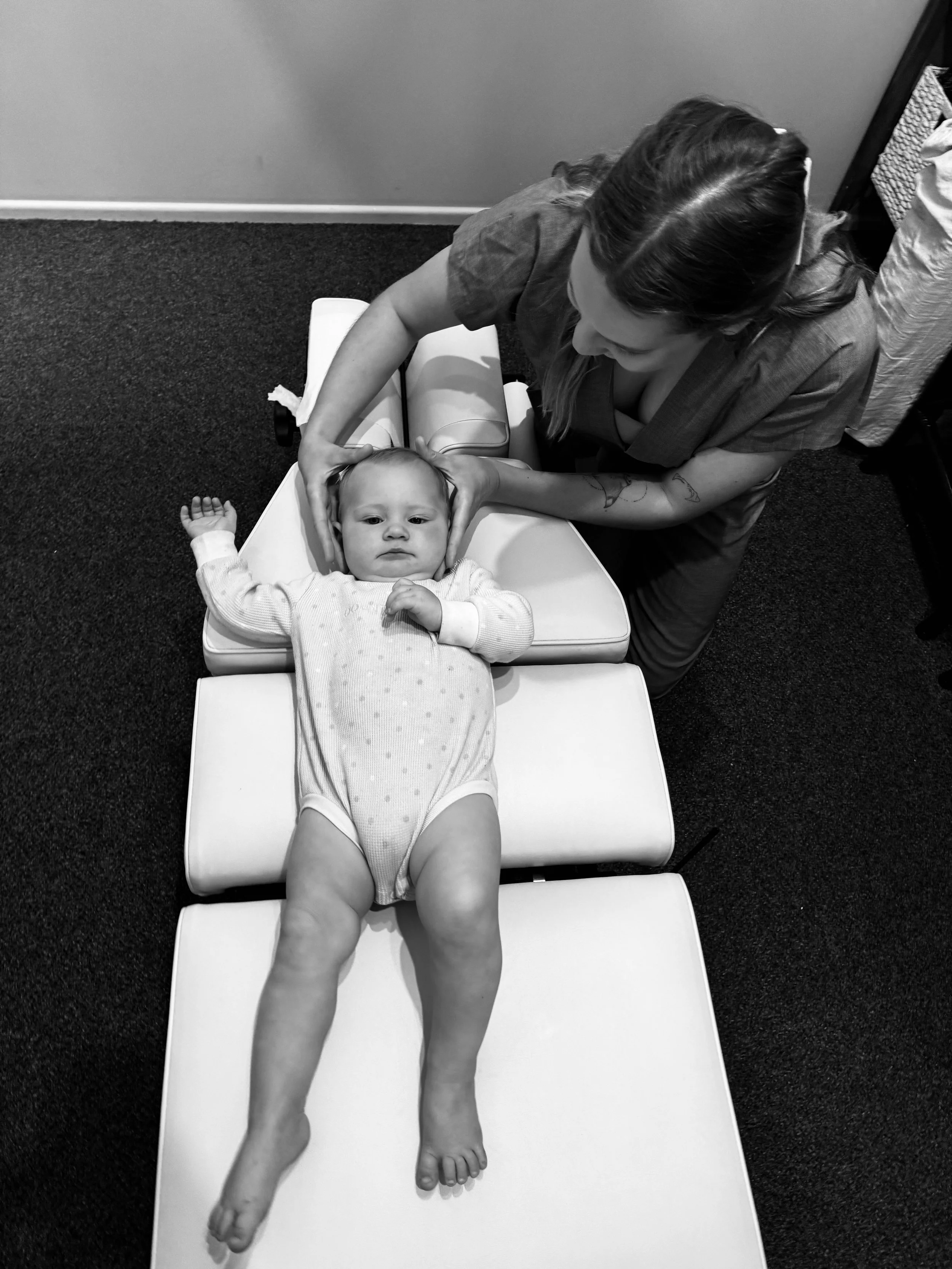
Age specific neurological assessment helps track your babies development.
Why Developmental Milestones Matter
In the first year of life, babies develop rapidly. Their brain and nervous system are constantly forming new connections that support movement, balance, coordination, and sensory development.
Milestones give parents and health professionals a way to observe how babies are progressing through these stages.
They can help identify when development is moving smoothly, and when a baby might benefit from extra support or assessment.
Key Milestones in the First Year
Tummy Time
Begins from birth. Tummy Time helps strengthen their neck, shoulders, core & develop spinal curves. It is also essential for visual tracking & spatial awareness. You may also see:
• Lifting their head during tummy time
• Turning their head from side to side
• Bringing hands toward their mouth
• Beginning to follow faces and objects with their eyes
• Starting to smile and interact
Your baby should be settled and happy throughout tummy time without any screaming, fussiness or prolonged crying.
Rolling
As babies grow stronger, they begin developing more control over their movements.
From 3 months your baby should start rolling belly to back, and by 6 months they should be rolling back to belly. There shouldn’t be any preference for left or right.
You may also notice that your baby:
• Pushes up on their arms during tummy time
• Reaches and grabs toys
• Brings objects to their mouth
• Begins to sit with support (from 4 months)
Rolling helps develop postural control & engages the brain regions responsible for fine motor skills, reading and writing.
Sitting
Your baby should start to sit on their own without any support around 6 months.
This builds balance and core strength essential for hand eye coordination and motor planning.
Cross Crawling
You may notice your baby start to push up on their hands and knees and rock back and forth around 6 months of age.
From 7 months, baby should be cross crawling. Commando, worm crawling or bum shuffling may be a sign of restriction which may be assessed and treated by an advanced paediatric chiropractor.
A symmetric cross crawl is essential for brain development between the left and right hemispheres to communicate effectively.
Walking
Toward the end of the first year, babies often begin preparing for standing and walking. From 9 months you may see baby start to:
• Pull up to stand
• Cruise along furniture
• Stand with support
• Take early steps
• Improve hand coordination and fine motor skills
Your baby should be walking independently around 12 months of age and no later than 18 months old.
Every Baby Develops Differently
One of the most important things to remember is that development is not a race.
Delays or asymmetry with any of these milestones may be an indicator of restriction in their body, and may require further assessment.
Remember that each child develops differently, celebrate each milestone and if you have any concerns, reach out to your trusted paediatric provider.
When to Seek Advice
Parents may choose to seek advice if they notice:
• Difficulty with tummy time
• Strong head preference to one side
• Delays in rolling, sitting, or crawling
• Limited movement on one side of the body
• Persistent stiffness or tension
Early assessment can help ensure babies are receiving the support they need for healthy development.
Supporting Your Baby’s Development
Simple activities can help encourage healthy movement and development.
Parents can support their baby by:
Providing daily tummy time
Avoiding screen time
Allowing plenty of floor play and exploration
Limiting time restricted in swings, seats or capsules
Encouraging reaching, rolling and movement
Providing a safe environment to explore
Singing, talking and engaging with your baby
Making eye contact with your baby during breast feeding/bottle feeding
Movement, play and sound are some of the most important ways babies learn about their bodies and the world around them.
Developmental Support at The Nurture Haus
At The Nurture Haus, care for babies focuses on gentle assessment and support for the developing nervous system and musculoskeletal system.
Dr. Maddilyn works with infants and children of Mackay to assess movement patterns, posture, and comfort as babies grow through their developmental milestones.
If parents have concerns about their baby’s development, an early assessment may provide reassurance and guidance. Contact us today to find out if our care is suited to you.