Pelvic Pain in Pregnancy: What’s Normal and When to Get Help
Pregnancy is an incredible time of change in the body. As your baby grows, your pelvis adapts to support the extra weight and prepare for birth. Because of this, many women experience some level of pelvic discomfort during pregnancy.
But how do you know what’s normal pregnancy aches, and when it’s time to seek support?
Let’s break it down.
During pregnancy, your body releases hormones (like relaxin) that soften the ligaments around your pelvis. This helps your body prepare for labour and birth.
At the same time:
Your centre of gravity shifts
Your posture changes
Your abdominal muscles stretch
Your pelvic joints move more than usual
All of these changes can place extra stress on the pelvis, hips and lower back.
Mild discomfort is common, especially later in pregnancy — but significant pain is not something you just have to live with.
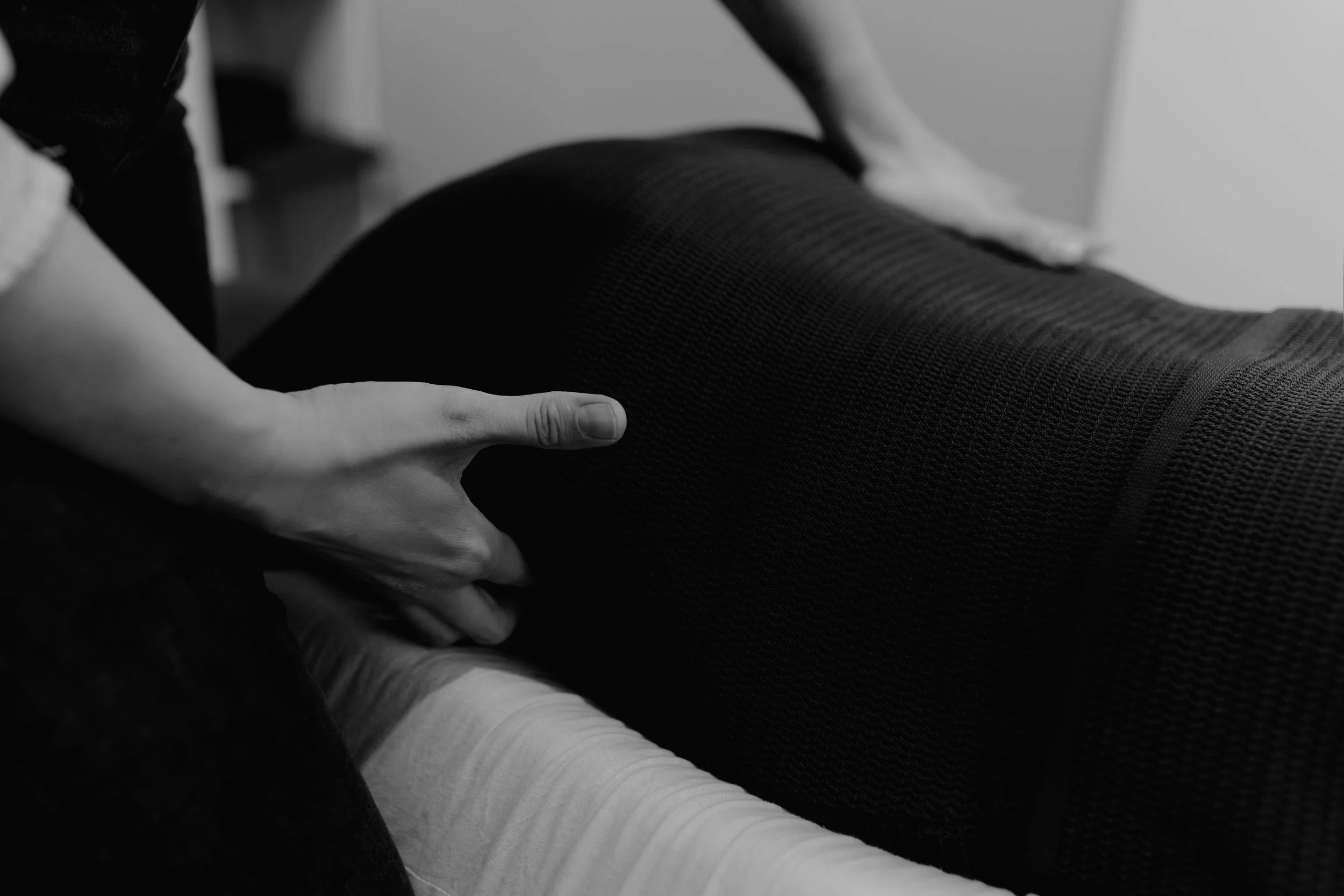
Gentle chiropractic technique used during pregnancy for pelvic pain relief.
Types of Pelvic Pain During Pregnancy
Many women describe pelvic pain in different ways depending on where the discomfort is coming from.
Pelvic Girdle Pain (PGP)
Pain around the pelvic joints, often felt:
In the front of the pelvis (pubic bone)
In the hips
Around the sacroiliac joints (low back dimples)
It may feel like:
Sharp or stabbing
Achy or heavy
Worse when walking, rolling in bed, or climbing stairs
Symphysis Pubis Dysfunction (SPD)
SPD is a specific type of pelvic pain involving the joint at the front of the pelvis (the pubic symphysis).
Common signs include:
Pain at the front of the pelvis
Clicking or grinding in the pelvis
Pain when separating the legs
Difficulty getting out of the car or bed
Pain when standing on one leg
What is Considered “Normal”?
Some mild discomfort can be expected as your body changes.
Common normal sensations include:
• Occasional aching in the hips or pelvis
• Mild lower back discomfort
• Brief twinges when changing position
• Feeling more tired or heavy in the pelvis at the end of the day
These symptoms are usually temporary and manageable.
Signs You Should Seek Help
Pelvic pain should not stop you from enjoying your pregnancy or moving normally.
It’s time to seek support if you notice:
Pain that affects walking
Difficulty rolling in bed
Pain when getting dressed
Sharp pain when climbing stairs
Pain that doesn’t improve with rest
A feeling like the pelvis is unstable or giving way
Early care can make a huge difference in keeping you comfortable during pregnancy.
If you're experiencing pelvic pain during pregnancy and live in Mackay or the Northern Beaches, chiropractic care may help support pelvic balance and comfort.
How Chiropractic Care May Help
At The Nurture Haus, pregnancy care focuses on helping the body move comfortably while supporting the nervous system and pelvic balance.
Chiropractic care during pregnancy may help:
Improve pelvic alignment and movement
Reduce tension around the pelvis and hips
Support better posture as baby grows
Improve comfort during sleep and daily movement
Many mums also choose to continue care throughout pregnancy to support optimal pelvic balance for labour and birth.
Simple Tips to Reduce Pelvic Pain
Here are a few things that can help reduce strain on the pelvis:
• Keep knees together when getting out of bed or the car
• Sit down to get dressed
• Avoid standing on one leg
• Take smaller steps when walking
• Use a pillow between your knees when sleeping
Small changes in movement can make a big difference.
You Don’t Have to Just “Put Up With It”
Pelvic pain is common in pregnancy, but that doesn’t mean it’s something you have to tolerate.
With the right support, many women experience significant relief and improved comfort throughout pregnancy.
If you're experiencing pelvic pain during pregnancy and would like support, you can book an appointment with us below.